05 October 2013 ~ 0 Comments

BlackBerry lays off yet more staff
blackberry hq

After some time of rumours, BlackBerry have admitted that over 4,000 of their staff will soon be without a job. Still struggling from lacklustre sales figures of their newest Blackberry 10 devices, the Canadian handset manufacturer released the news straight after the release of Apple’s latest flagship product – the iPhone 5S. In many ways, the rise of smart phone as brought about by Apple has been the catalyst for BlackBerry’s downward spiral of the last few years.

Indeed, it is probably true that Apple have wrestled the majority of their big spending corporate and high-end customers. Most sucessful handset manufacturers these days – companies like Samsung – have learned to compete with diversity in their product lineup and by offering cheaper options rather than trying to compete with Apple for the super high margin top-of-the-line products.

BlackBerry CEO Thorsten Heins may now be ruing his strategic decision to focus on the upper end of the market. He made it clear that he considered making budget smart phones a race-to-the-bottom and that the Canadian company would be concentrating on its traditional strong grounds of expensive handsets only affordable by very few. Ironically, this decision was seemingly made in ignorance of the fact that in recent times probably the only people keeping BlackBerry afloat have been teenagers who use their BBM service as a cheaper form of text messaging.

Indeed, the company’s balance sheet has been hurtling downwards in perpetual freefall for sometime now. The latest figures show that the last quarter produced losses of nearly $1 billion primarily due to poor sales figures. In fact, their revenue fell far short of the predicted $3 billion with the company only taking about half that over the last three months.

Other issues that have caused BlackBerry to come into difficulties over recent years include the massive ongoing outages that happened almost exactly 2 years ago now. During these disruptions, millions of customers – many of them urgent business requirements – were left without access to e-mails or BBM messages several days. and of course, BlackBerry also lost untold amounts of cash over their failed venture to produce the BlackBerry Playbook tablet.

In fact the company struggled to sell even 4 million smartphones during the last quarter and the last time the figures were this poor was the same summer that the first iPhone was released by Steve Jobs. Their share price has also been plummeting in light of rumours about these figures and this has wiped billions of dollars off its value in just a few days.

The latest disappointing figures round off an awful couple of years for BlackBerry that has seen them lose a total of almost $2 billion. With substantial losses such as this, it remains to be seen how much longer they can continue as an operating company. BlackBerry have been looking for an external buyer for sometime now, but no deals have been forthcoming yet.

Things aren’t looking better for BlackBerry in the future either. After many rumours, the iPhone 5S really did have a fingerprint scanner and has now been released. It is being marketed as having ever more robust security features and will surely take another chunk out of BlackBerry’s customer base. Indeed, if Apple can persuade companies and governments that their sensitive information will be secure on iPhones, we can see many large contracts moving over from BlackBerry who used to be their traditional supplier.

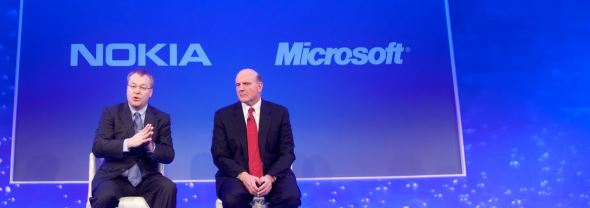
Perhaps the most dire news of all is the recent industry-shaking sale of Nokia to Microsoft. It was thought that BlackBerry were courting Microsoft as a last gasp chance to gain any sort of meaningful foothold in the fast paced and ruthless smart phone market. This deal surely binds the two companies together for some time and effectively leaves BlackBerry as the left out third wheel.

And they’s certainly not going to be any love forthcoming from Google or Apple either. Without a relationship with any of the three major phone software companies in today’s mobile ecosystem, it’s hard to see how BlackBerry can have any meaningful place in the industry in the coming years.

Only two years ago, BlackBerry had a significant share of the smartphone market but now the latest figures show that it has less than 5%. Their CEO claimed that their flagship handset the Q10 would sell tens of millions but the actual sales figures are looking to be closer to just five million.

And as a result these job losses have pretty much been forced upon the company. There were already 5,000 redundancies last year followed by some more in the summer. The 4,500 who are being sacked now will reduce BlackBerry’s employees by almost a half. Their hope and prayer is that in the process the they will also slash their expenses and somehow return to profitability. We are unsure whether this will be possible after such a long time of haemorrhaging cash and struggling to make any meaningful difference in a market that appears have moved on from them.

What’s your take on all this? Do you think that there’s any future left will BlackBerry and if not how many more years will at last? Was the purchase of Nokia by Microsoft really is death knoll? Or had the end come earlier? And if you think that BlackBerry will survive all this and emerge again to be a successful company, how do you think they’ll go about doing it?
Continue Reading

02 October 2013 ~ 10 Comments

What caused the Giffgaff outage?

giffgaff outage

Back in April, Giffgaff suffered a partial network outage for a few hours. We liveblogged the event throughout the evening and later, Mike Fairman, the “gaffer” and CEO of Giffgaff issued a formal apology on the Giffgaff blog.

However, we wanted to dig a little deeper and find out the exact explanation for the series of events that led to the outage. After all, many things must have gone wrong to lead to the particular situation that left untold thousands without any mobile signal for several hours. And since there was another widespread outage at Giffgaff only last Friday, what better time than now to look back at the past mistakes have been made? [edit: There’s been another widespread outage tonight since we published this post. Seriously!]

This is especially true as there had only recently been an O2 issue in October the previous year after which Derek McManus, the Chief Operating Officer, promised a £10 million investment in infrastructure to prevent the same thing happening again. There had also been a major 24-hour outage in July which prompted Telefónica UK CEO Ronan Dunne to apologise and offer compensation to >O2 customers as well as a small outage on Giffgaff in March last year.

Given these previous issue and the promises of substantial investments in infrastructure to avoid further outages, we feel it’s only fair for customers to know the root cause and the decisions that led to them being without their phone for such a long time. Previously we investigated the true details of the big O2 outage so now we’re aiming to do the same for this one.

Giffgaff usually have excellent communication and kept users up to date through the forums while the issue was ongoing. They also posted several blog posts detailing the causes of the outage and what prophylactic measures would be taken in the days and weeks after service was restored.

Charl Tintinger, Head of Operations at Giffgaff, made a blog post explaining in detail what happened. Effectively, his explanation was that a third party supplier “experienced a mains power failure, which resulted in a service wide outage”.

Now this may seem like an explanation, but it’s actually ignoring some very important issues. First of all, anyone who works in telecoms knows that it takes more than a power outage to interrupt critical systems than affect uptime and necessary services. The standard configuration for any data centre is for them to use normal mains power from the National Grid but, in the event of an outage, to automatically transfer to battery powered Uninterruptible Power Supplies (UPS). These keep the systems alive until the power is restored or, if the outage is ongoing, allow for a smooth transfer to backup diesel generators. These generators should automatically kick in and start pumping out electricity before the batteries die.

Data centers rarely just rely on just battery UPS devices for emergency power – in fact, many even have secondary backup N+1 generators to provide additional redundancy. Critical services can take this even further. After all, the people who run mission-critical systems like this have learned over the years that, WTSHTF, outages can last longer than a few hours. It’s better to be prepared for the worst.

However, Giffgaff’s statement said that the reason for this outage was that the “backup power system” was “depleted before the issue was completely resolved”. Now backup generators typically have about a week’s supply of diesel – there’s no way this would have been going on for so long without the administrators being notified or the issue being resolved. So it sounds like there are two possibilities – either the data centre Giffgaff had outsourced to didn’t have backup generators or there was some sort of switchover failure when transferring from the UPS power to the generators.

Both of these possibility distinctly call into question the competence of the third-party Giffgaff were using as well as why they were chosen. It’s a real shame that they were not explicitly named nor was it mentioned whether they’d still be supplying services for the mobile network. After all, it is standard practice to have a Service Level Agreement that guarantees a certain level of uptime. For example, some service providers might promise a high availability of services where the downtime is less than 5.26 minutes per year – this is the equivalent of 99.999% availability (commonly referred to as “five nines”). Service Level Agreements are standard practice in telecommunications – it is not uncommon for network service providers to explicitly state their own service level agreement on their websites.

Giffgaff have said that “The data centre have already updated some of their processes and implemented some physical monitoring on the boxes should the direct power be lost and battery power start to be used”. They have also claimed that “the monitoring on the network nodes is being reviewed so that they alert at the right time, giving engineers enough time to get to site before the back up power is at risk”.

You do expect to get the quality of service you pay for and this sounds suspiciously like the data centre was not meeting modern standards or that someone messed up pretty severely. There certainly shouldn’t be issues with monitoring the power supply to critical systems and we sincerely hope that Giffgaff are reviewing their contract with this third party.

For those of you who want a bit more detail about the particular system that was affected, Giffgaff have said that it was a “piece of hardware that manages calls and texts on the network”. This might not seem like the most helpful explanation but let’s think about how a mobile network is structured.

There are three main parts of the core Network Switching Subsystem – the Mobile Switching Centre (MSC) which effectively sets and releases all connections, the Visitor Location Register (VLR) which stores information about the physical location of each subscriber and the Home Location Register (HLR) which holds information about each subscriber’s SIM card and phone number. Although we don’t have so much information, we can be reasonably sure that this particular outage was due to some part of the Network Switching Substation.

Anyway, we hope that explains a bit more of the details behind this outage. Hopefully now you have a better idea how a mobile operator works and what can be done to avoid these sorts of issues. Thankfully, this outage is now well in the past. Although we are becoming increasingly reliant on our mobiles, a few hours without signal is usually not an emergency and hopefully can be filed away under first world problems.

Continue Reading

Tags: , ,

23 September 2013 ~ 0 Comments

Reflections on Microsoft & Nokia (part 3)

nokia microsoft 3

So it’s now been several days since the shock announcement that Microsoft are acquiring Nokia. And we’ve had plenty of time now to hear opinions from talking heads and industry experts as well as let the news sink in. But now it’s time to look back and what exactly happened, why and what it means for consumers and all companies involved in mobile technology. This is final part (part 1, part 2) in our in-depth look and the background and future of the historic £4.6 billion deal.

The future for Nokia (and Blackerry)?

But what does the deal mean for the future of Nokia? Outgoing Microsoft CEO, Steve Ballmer, has maintained that the company is still committed to Nokia’s Finnish employees. However, you don’t have to be too cynical to assume that it’s only a matter of time before more redundancies, and many roles are outsourced by the American company.

There are also ethical concerns as Nokia were well-regarded as by far the most morally sound of mobile phone manufacturers. Apple’s contractors such as Foxconn have long been in the new for their appalling labour conditions and most smart phones and smart phone parts are manufactured in the Far East where workers’ rights are far from the standard expected in Western Europe.

It remains to be seen how long Nokia’s ethical credentials will last under the guidance of Microsoft. It only seems a matter of time before manufacturing is moved completely to China. It’s also been alleged that they will now aim to cut costs by sourcing metals used in their phones from illegal mines in Africa.

The deal also shakes up the entire smart phone market. Now, there really are only three big players left with a chance in terms of mobile software – Google with its Android operating system, Apple with iOS, and Microsoft with Windows Phone.

Previously, Canadian manufacturer BlackBerry (formerly RIM) had also been in the running although, like Nokia, its fortunes have also significantly fallen in recent years . With this new alliance forged between Nokia and Microsoft, it’s hard to see a place for BlackBerry in the future of smart phones. It has recently seen its revenue and sales fall off a cliff edge so much so that it has been desperately trying to find a buyer. With Microsoft choosing Nokia over BlackBerry, it’s hard to see how they’ll be up to compete with the new big three of Google, Apple and Microsoft.

As for the future of Microsoft and its aim to have a meaningful presence in the mobile market, it’s really too early to tell now. The duopoly of Android and iOS seems incredibly solid at the moment and it’s hard to see how Microsoft will be to chip away at their market share. However, it is clear that they are willing to spend and do whatever it takes to have a chance to be one of the major players in this business.

Having said that, the underlying dynamics that have meant Windows Phone has not been the success Microsoft hoped are not changing in any way with this acquisition. The strategy has been failing so far, as hard to see how ploughing even more money into it is likely to change any of the fundamental reasons why they haven’t been successful so far.

The purchase of Nokia by Microsoft was far from unseen by industry insiders. However it’s certainly a major event in the saga of the smartphone era. In many ways, this bold move was an entirely necessary gamble for Microsoft if they are to have any hope of maintaining a foothold. In the broader picture, Microsoft have been struggling to keep up as a technology company in the age of mobile and it really needs to make mobile phones an integral part of its business plan if it is to maintain any of its dominance it enjoyed in the 90s and early 21st century.

So, over to you, our readers. What do you make of this shocking development after reading all three parts? Do you think Nokia’s ethical manufacturing processes will suffer all that staff will be laid off in the coming months? And, most importantly of all, how will it affect the balance between the three major mobile operating systems in the coming years?

Continue Reading