18 September 2013 ~ 0 Comments

Reflections on Microsoft & Nokia (part 2)
nokia microsoft 2

So it’s now been several days since the shock announcement that Microsoft are acquiring Nokia. And we’ve had plenty of time now to hear opinions from talking heads and industry experts as well as let the news sink in. But now it’s time to look back and what exactly happened, why and what it means for consumers and all companies involved in mobile technology. Over the next three parts of this series, we’ll do exactly that. Today we pick up where we left off by continuing from part 1 in which we looked at The Rise and Fall of Nokia.

The £4.6 billion deal

So what about this deal? Well Microsoft have been working with Nokia for some time now on their smartphones running the Windows Phone operating system. In fact, it’s fair to say that Nokia has pretty much been Microsoft’s mobile arm since 2011 when they announced their partnership. In the deal, Nokia chose Windows Mobile as their main mobile operating system over their own Symbian software.

In return, Microsoft ploughed hundreds of millions or even billions into supporting Nokia. They paid massive amounts to fund the ever-increasing marketing budgets required to convince people to use Windows Phone. The partnership also involved sharing of ad-revenue and royalties.

With their track record of success, you may well ask why Nokia didn’t chose to go with Android like many other mobile manufacturers such as HTC and LG. It been a well-known open secret in the industry that Nokia were too scared to compete in the open Android market. They thought that they would not survive when pitched up again the stranglehold of Samsung et al.

Instead, their strategy was to integrate vertically with their phones being manufactured from Nokia components rather than off-the-shelf parts. This was all behind their decision to try and make a competitor to Google and Apple with Microsoft and Windows Phone.

Now, with the announcement of this detail, Microsoft is going all in. They have paid over £4.6 billion (almost €5.5 billion) to buy the whole Nokia company. Included in the sale price is 23,000 staff who will now work for Microsoft as well as Nokai’s Lumia and Asha brand names. This massive deal will also see Microsoft invest an additional €1.5 billion in financing to help with the Finnish company’s cash flow woes and debt issues.

Of course, as is an increasingly-familiar story in the mobile industry, Microsoft is avoiding taxes by financing the deal with non-US cash that they don’t have to repatriate. In this way, it’s thought they are avoiding billions in tax payments.

Nokia and Microsoft and the role of Stephen Elop

How had Nokia’s partnership with Microsoft been going so far? Well, they had been struggling but things might have been picking up shortly. Windows Phone was reaching a significant market share in major markets in Europe such as France and the UK as well as doing well in growing economies like India and Mexico.

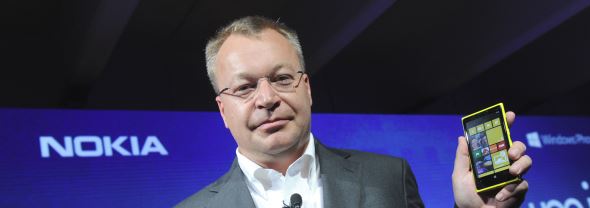
However, many are seeing signs of a sort of conspiracy in the demise of Nokia. Stephen Elop was the head of Microsoft’s Business Division for two and a half years before he took over as Nokia’s CEO in September 2010. This was the first time that Nokia had a non-Finnish director and Elop earned over $6 million as a golden handshake signing bonus. As part of the deal for Microsoft acquiring Nokia, Elop will now return to Microsoft as head of their Devices team.

Elop’s reign at Nokia was fraught with controversy. His favouritism for Windows Phone over their internally developed operating systems – Symbian and Meego – was seen as a sort of Trojan horse-style sabotage. Many in the industry thought that Elop was trying to destroy Nokia from the inside. It was under his leadership that all internal smartphone development was killed off at Nokia in favour of Microsoft’s product. He was also damaging Nokia’s reputation by deriding it in public statements.

As a result, Nokia’s market share has plummeted over the last few years. Of course, this is also meant that the value of the company has fallen meaning it is ripe for the picking as Microsoft is now able to snatch itself a bargain. Could it really be that Stephen Elop was a Microsoft plant simply devised to allow this acquisition at a preferential price a few years later? Certainly there have been rumours that Microsoft would try to buy Nokia ever since he was appointed a few years ago.

So there you go. Please go on to read our final instalment of this series over at part three. But also let us know what your thoughts are on this. Have Nokia undervalued themselves in this deal? Were they right to reject Android and commit themselves to Windows Phone? Is it fair to say that Elop undermined Nokia while he was at the company and that he had acted like a Trojan horse?
Continue Reading

13 September 2013 ~ 0 Comments

Reflections on Microsoft & Nokia (part 1)

nokia microsoft 1

So it’s now been several days since the shock announcement that Microsoft are acquiring Nokia. And we’ve had plenty of time now to hear opinions from talking heads and industry experts as well as let the news sink in. But now it’s time to look back and what exactly happened, why and what it means for consumers and all companies involved in mobile technology. Over the next three parts of this series, we’ll do exactly that.

The rise and fall of Nokia

First of all, let’s look at the history of Nokia. The company was actually first started in Tampere, Finland in the 19th century. However, it got into the telecommunications business in the 70s and created the radio telephone company Mobira Oy in 1979. The first Nokia mobile phone was released in 1981 and in 1982 it came out with the Mobira Senator carphone.

Nokia was also the first company to come out with a handheld mobile with the Mobira Cityman which came in at a hefty weight of almost a kilo and would set you back several thousand pounds. Nokia were pioneering internet-ready phones with the WAP-enabled 7110 coming out in 1999. And who could forget the iconic Nokia 3210 which first introduced Snake to the masses 14 years ago and which sold over 160 million units.

For decades, the Finnish company has been synonymous with mobile phones. Many of us remember our first mobile phone which, more likely than not, was manufactured by Nokia. Indeed, they were the world’s biggest mobile handset manufacturer for over fourteen years.

However, with the advent of the smartphone and the popularity of Apple and Samsung’s models, Nokia has been in decline. In fact, 2012 was the first time since 1998 that Nokia’s sales were overtaken. As well as the success of Apple and Samsung, another huge factor was the growth of emerging mobile phone markets, especially in Asia where Android is dominant.

As a result, Nokia has found itself in a financial nosedive. As recently as 2011 it was still responsible for over 15% of all smartphone sales according to worldwide sales figures. However, by 2012 this figure had catastrophically plummeted to only 5%. And we can only expect to see this number fall further in the future. Nokia is now selling less than 10% of the smartphones as Samsung.

In fact, Nokia’s woes are only too well known to the 1,000 staff who were made redundant at the beginning of the year. Nokia’s falling sales has necessitated their efforts to o save money and streamline its operations by reducing outgoings on wages. Almost all the jobs that were axed were in Finland but many were in Canada and Germany. The redundant employees were replaced by far cheaper outsourced positions in India.

This wasn’t the first job cuts Nokia’s had to make in recent years. In fact, as part of a drive to realise over £1 billion in savings, Nokia has cut over 15,000 jobs since 2012. These massive figures just go to show, with absolute clarity, how far Nokia has fallen in recent years and how badly it has struggled to compete in the age of the smartphone.

Nokia’s revenues have crashed from over €7 billion to just under €3 billion in the second quarter of 2013. With a strong heritage selling feature phones, more affordable smartphones have meant that even in the developing world Nokia is losing sales. And in fact, it has been haemorrhaging money – there’s only been a profit for one of the last six quarters which really shows how precarious their position is.

Please let us know your comments so far. And please stay tuned for part two coming shortly where we discuss in detail the terms of the £4.6 billion deal and well as the relationship between Microsoft and Nokia as well as the controversial role of Stephen Elop.

Continue Reading

10 September 2013 ~ 0 Comments

The lowdown on the iPhone 5S and 5C

iphone 5s

Keep checking back for the latest updates live from Cupertino, California as Tim Cook reveals the new iPhone 5S and iPhone 5C. We’ll be updating this post as it happens.

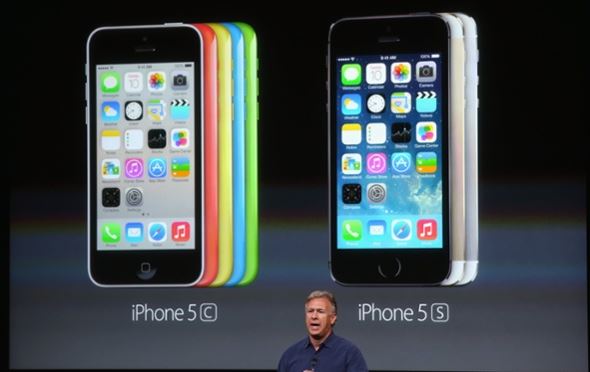
  • The iPhone 5C and 5S have both been confirmed. The official release date for both phones will be 20 September.
  • Both running iOS 7. For existing iPhone users, all models from iPhone 4 and above will be getting an optional iOS 7 upgrade from 18 September. The newer iPads will also be getting the update.
  • iTunes Radio will also be launched on 18 September. It will allow you to create your own Pandora-style stations to broadcast.
  • iWork – a suite of apps which is a competitor to Microsoft Office – has had its price slashed to free.
  • The iPhone 5 is being discontinued but the cheaper iPhone 4S will still be an option.

iPhone 5S

  • Colours: black, silver and gold
  • CPU: 64-bit A7 processor
  • M7 motion co-processor continuously monitoring data from the accelerometer, compass, and gyroscope
  • Fingerprint scanner on home button
  • Camera: 8 megapixel, f2.2 5 element lens, 15% larger sensor, 10 frames per second burst mode, 720p at 120 frames per second
  • Battery: 10 hours 3G talk, 10 hours LTE browsing, 10 hours of video
  • UK prices: 16GB £549, 32GB £629, 64GB £709
  • US prices:- 16GB $649, 32GB $749, 64GB $849

iPhone 5C

  • Colours: green, yellow, blue, white and pink
  • CPU: A6 processor
  • Display: 4-inch retina display
  • Camera: 8 megapixel camera
  • UK handset: 16GB £469, 32GB £549
  • US handset: 16GB $549, 32GB $649

Our immediate thoughts

  • It’s surprising how little they made of iOS 7.
  • The security of the Touch ID fingerprint sensor and the fact all its info stays on the device is a big deal in light of Snowden’s NSA/GCHQ revelations.
  • The iPhone 5C is a lot more expensive than expected. Can they really be chasing emerging markets at these prices? In fact, even the 5S is pretty pricey even for Apple devices.
  • It’s been a while since the camera was updated so hopefully the 5S’s camera will have much better low-light performance with the bigger sensor combined with the two-tone flash LEDs and larger aperture. Both the 5S and 5C still only have 8 megapixels, though.
  • The M7 motion processor could have some really exciting applications. Check out this 3DK demo, for example.
  • The price point of the 5C is a bit of a surprise. Most people were expecting/hoping they’d hit the magical £300 price point and make it a huge seller. However, with the lowest model at £469, it’s not low enough to be really competitive with mid-range Android phones. Partly this is the intentional point – Marketing 101 shows that setting a high price gives the impression of quality and value. However, the fact that it’s only £80 cheaper than the 5S (that’s just over a 10% difference when looking at the 32GB version), you have to ask why anyone would go for the lower specs and plasticy case of the 5C over the 5S.
  • There’s nothing really new in the way of features or specs to report that hadn’t already been leaked. It seems each updated version has fewer and fewer innovations…

Continue Reading